

Charting a New Course in a $6.5 Trillion Global Market: Bangladesh’s Islamic Finance on the Path of Reform and Trust
Interest-free and ethical finance is no longer confined to the Muslim world; it has emerged as a resilient, mainstream pillar of the global economy. According to the Islamic Finance Development Report 2026, jointly published by the London Stock Exchange Group and the Islamic Corporation for the Development of the Private Sector (ICD), global Islamic finance assets grew by 9% in 2025 to reach $6.5 trillion. Analyzing data across 140 countries, the report projects the industry to surpass $10.5 trillion by 2030.
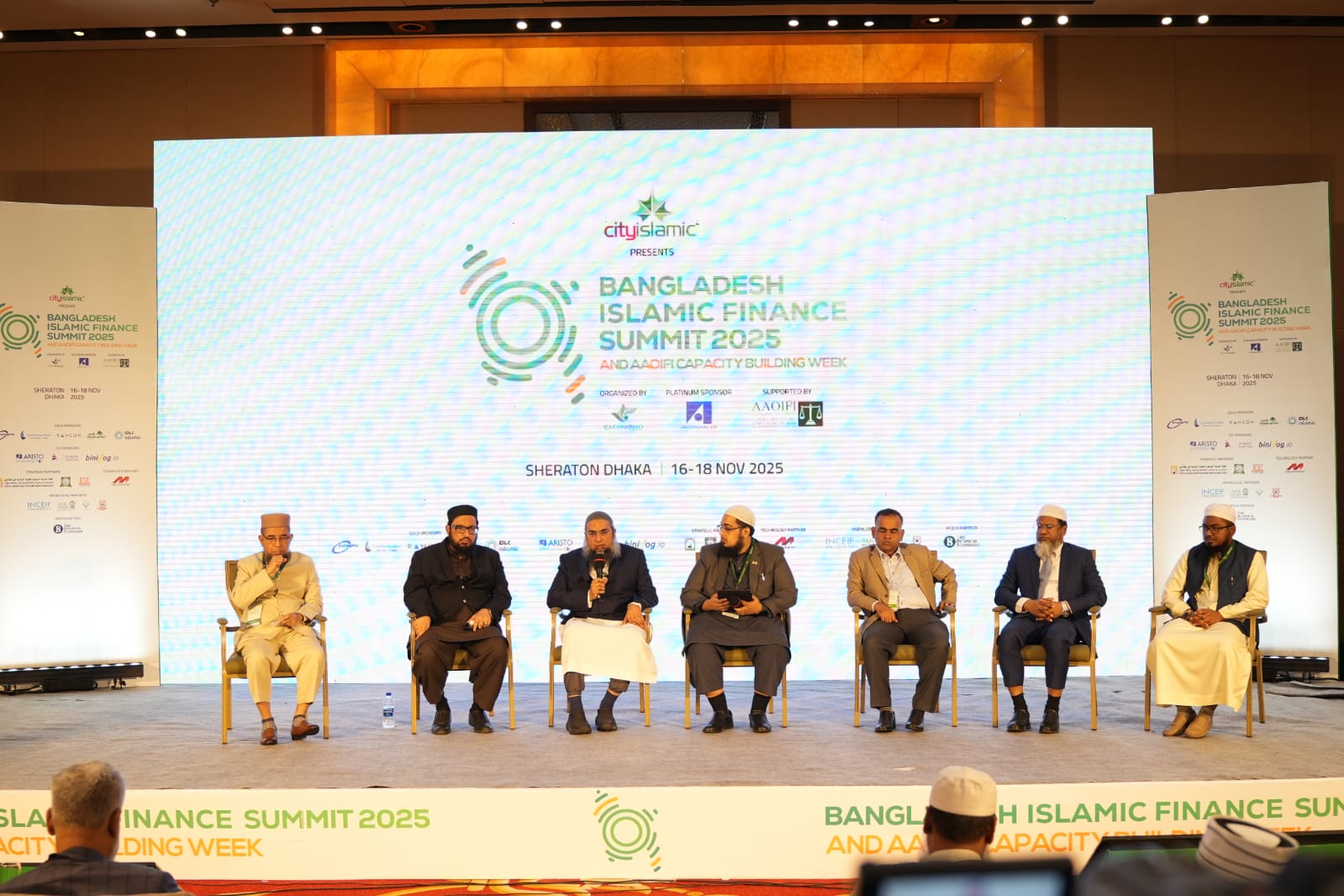
Against this backdrop of rapid global expansion, Dhaka is preparing to host the four-day ‘Bangladesh Islamic Finance Summit 2026’ (BIFS 2026) alongside the ‘AAOIFI Capacity Building Week’ from November 22 to 25, 2026, at the Radisson Blu Dhaka Water Garden. Jointly organized by leading Shariah advisory firm IFA Consultancy (IFAC) and Malaysia-based Adl Advisory, in collaboration with global standard-setting body AAOIFI and CIES, the gathering aims to chart a concrete roadmap for institutional reform and sustainable growth in Bangladesh’s Shariah-compliant financial sector.
Navigating Domestic Challenges Through Institutional Reform
Globally, Islamic banking operates across 85 countries, holding approximately $4.5 trillion in assets—roughly 70% of the entire Islamic finance industry. In Bangladesh, the sector remains deeply integrated into the national economy, accounting for 26.19% of total investments and 22.53% of total deposits in the overall banking system. Per Bangladesh Bank’s Q2 (April–June) 2026 report, six full-fledged Islamic banks, alongside 53 Islamic branches of 15 conventional banks and 990 Islamic windows of 22 banks, manage roughly BDT 4.68 trillion in deposits and BDT 5.37 trillion in investments.
Despite this strong footprint, governance lapses, liquidity management bottlenecks, and a surge in non-performing investments among full-fledged Islamic banks (reaching 57.4%) have triggered an urgent need for structural overhaul. To restore public confidence, five troubled Shariah-based banks are currently being consolidated into a unified entity, ‘Sammilito Islami Bank’.
BIFS 2026 will examine the operational lessons from this merger while advocating for the swift enactment and enforcement of a transparent, modern Islamic Banking Act.
Bridging Policy Gaps and Rebuilding Trust
Held under the theme ‘Trust, Reform and Growth: Scaling Shariah-Compliant Finance in Bangladesh’,
the summit brings together key industry architects who view regulatory alignment and human capital as the primary catalysts for recovery.
Dr. Muhammad Yusuf Sultan, Co-founder of IFA Consultancy and Founder & CEO of Adl Advisory, emphasizes the urgency of aligning domestic practices with international benchmarks. “As global Islamic finance reaches $6.5 trillion, Bangladesh must position itself at the forefront of this growth,” Dr. Sultan states. “What we urgently need is institutional reform and internationally benchmarked Shariah compliance. BIFS 2026 will bring the country’s five major regulatory bodies—Bangladesh Bank, BSEC, IDRA, BIDA, and NBR—to the same table, paving the way for those vital reforms.” He further notes that the incomplete adoption of AAOIFI standards remains a major hurdle in attracting foreign direct investment (FDI), a gap that can be closed by upskilling local bankers and Shariah auditors.
Echoing the importance of capacity building
Mufti Abdullah Masum, Founder and Director of IFA Consultancy, underscores that public confidence is the ultimate currency of Islamic finance. “Trust and skilled human resources are the core foundations of any financial system,” he asserts. “A vast segment of our population actively seeks interest-free financial services driven by their religious values. To sustain and scale this immense domestic demand, transparency and accountability are non-negotiable.”
To address this directly, the summit will open with the ‘AAOIFI Capacity Building Week’ on November 22–23, offering hands-on training led by international experts in Sukuk issuance, Shariah audit and governance, treasury management, and global accounting standards.
Unlocking Growth in Sukuk, Takaful, and the Halal Economy
Beyond traditional banking, vast opportunities await across capital markets, insurance, and international trade:
Sukuk and Islamic Capital Markets: Global Sukuk outstanding has reached $1.1 trillion, led by Saudi Arabia, while ESG (Environmental, Social, and Governance) Sukuk issuances surged by 55% to a record $20.8 billion. Since introducing Sukuk in December 2020, Bangladesh has raised over BDT 52,000 crore. Notably, the country’s debut short-term Sukuk auction in June 2026 was oversubscribed by nearly 10 times, highlighting an acute market appetite for Shariah-compliant liquidity instruments. With Bangladesh Bank targeting another BDT 25,000 crore in FY 2026–27 and the DSE Shariah Index (DSES) rising over 10% in FY 2025–26, expanding corporate Sukuk, Shariah mutual funds, and Islamic REITs will unlock long-term infrastructure and corporate financing.
Takaful (Islamic Insurance): Global Takaful assets grew by 9% to $146 billion, spanning 409 operators and windows across 54 countries. While several Islamic life and general insurers operate in Bangladesh, a dedicated regulatory framework remains absent. Encouragingly, the Insurance Development and Regulatory Authority (IDRA) has signaled plans for a separate framework, mandated Sukuk investments for Islamic insurers, and granted the first formal Shariah-based insurance registration in February 2026. The ‘BIFS Takaful Forum’ on November 25 will convene policymakers and actuarial experts to accelerate structural reforms in this sector.
Halal Economy and Trade: The global Halal market stood at $3.3 trillion in 2025 and is projected to hit $9.45 trillion by 2030. Yet, Bangladesh’s Halal exports remain under $1 billion ($988.8 million in FY 2024–25). Strengthening the certification capacity of the Islamic Foundation and BSTI, establishing a unified, globally recognized Halal certification body, and signing mutual recognition agreements with major markets like Saudi Arabia—paired with Shariah-compliant trade finance—could transform Bangladesh’s export landscape.
The Road Ahead
Expected to convene around 400 local and international delegates, the second edition of BIFS (following its inaugural event in November 2023) will mark major intellectual milestones. Highlights include the unveiling of the English translation of Islamic banking memoirs by Shaykh Mufti Muhammad Taqi Usmani (Chairman of the AAOIFI Shariah Board), the launch of the ‘Bangladesh Islamic Finance Outlook 2027’, and the adoption of ‘The BIFS Resolution 2026’. Additionally, leveraging Islamic FinTech and digital banking to bring marginalized populations into the formal Shariah-compliant financial fold remains a key priority.
While markets like Malaysia, Saudi Arabia, the UAE, Indonesia, and Pakistan currently lead the global Islamic finance industry, Bangladesh possesses unmatched domestic demand. With coordinated regulatory action, adherence to global standards, and skilled professionals, Bangladesh is well-positioned to emerge as an emerging hub for Islamic finance in South Asia.
The Writer is a Senior Journalist & Islamic Finance Analyst