

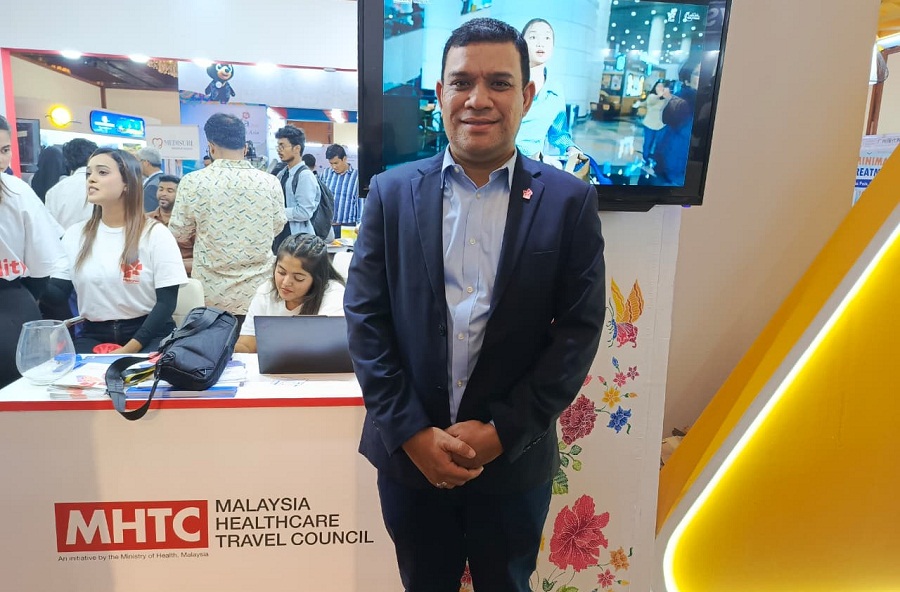
“Malaysia Strengthens Its Position as a Global Healthcare Travel Hub”
Muhammad Hizami Aizat, Head of Development Market, Marketing and Communications at the Malaysia Healthcare Travel Council (MHTC), spoke with Sadik Sagar of The Current View (TCV) in an exclusive interview, sharing insights into Malaysia’s healthcare tourism industry, its growth, and future direction.
TCV: To begin, could you explain the role of the Malaysia Healthcare Travel Council in developing the country’s healthcare tourism industry?
Muhammad Hizami Aizat: The Malaysia Healthcare Travel Council (MHTC) is a government agency under the Ministry of Health Malaysia, responsible for driving the nation’s healthcare tourism industry. It coordinates a broad ecosystem that includes private hospitals, medical centres, and government stakeholders. Its main goal is to position Malaysia as a leading global healthcare destination by ensuring quality, efficiency, and strong international promotion.
TCV: What is the current performance of Malaysia Healthcare, and what do the latest figures indicate about the sector’s growth?
Muhammad Hizami Aizat: The sector continues to grow steadily. In 2024, Malaysia welcomed around 1.59 million healthcare visitors, generating RM2.72 billion in revenue. Preliminary figures for 2025 suggest further growth, with about 1.84 million visitors contributing RM3.34 billion. This reflects rising global confidence in Malaysia’s healthcare services.
TCV: Which countries contribute the most to patient arrivals, and what treatments are most in demand?
Muhammad Hizami Aizat: Indonesia remains the largest source market, followed by China, India, the United Kingdom, and Singapore. Emerging markets include Myanmar, Cambodia, Bangladesh, Oman, and Kuwait. Patients commonly seek cardiology, orthopaedics, oncology, fertility treatments, and health screenings, with increasing interest in preventive care.
TCV: How does Malaysia’s e-Visa facilitation support healthcare travel?
Muhammad Hizami Aizat: The e-Visa system makes travel more convenient for patients and their families. A simplified visa process allows them to plan treatment journeys with greater ease. This accessibility, combined with quality healthcare and hospitality, enhances the overall experience and strengthens Malaysia’s competitiveness.
TCV: What are Malaysia Healthcare’s key strengths in hospitals and medical expertise?
Muhammad Hizami Aizat: Malaysia’s strengths lie in its skilled doctors, well-equipped hospitals, strong infrastructure, reliable medical outcomes, and hospitality. The country offers a nationwide network of hospitals with consistent standards. Key specialties include cardiac care, cancer treatment, orthopaedics, fertility, and rehabilitation, ensuring comprehensive care for patients.
TCV: How does this industry benefit the local economy?
Muhammad Hizami Aizat: Healthcare tourism benefits multiple sectors beyond hospitals. It supports hotels, transport, restaurants, and retail businesses. As patients often travel with family members, spending increases across services, creating a multiplier effect that contributes to economic growth and job creation.
TCV: Why is the Flagship Medical Tourism Hospital (FMTH) programme important?
Muhammad Hizami Aizat: The FMTH programme, introduced in 2019, aims to raise hospital standards to international levels. It focuses on quality, safety, and patient experience, ensuring Malaysia remains competitive. The programme also reflects strong investment in healthcare infrastructure and innovation.
TCV: How does FMTH strengthen patient confidence?
Muhammad Hizami Aizat: It assures patients that Malaysian hospitals meet global standards. This strengthens trust and highlights Malaysia’s ability to deliver high-quality care at competitive costs, especially for patients from Asia.
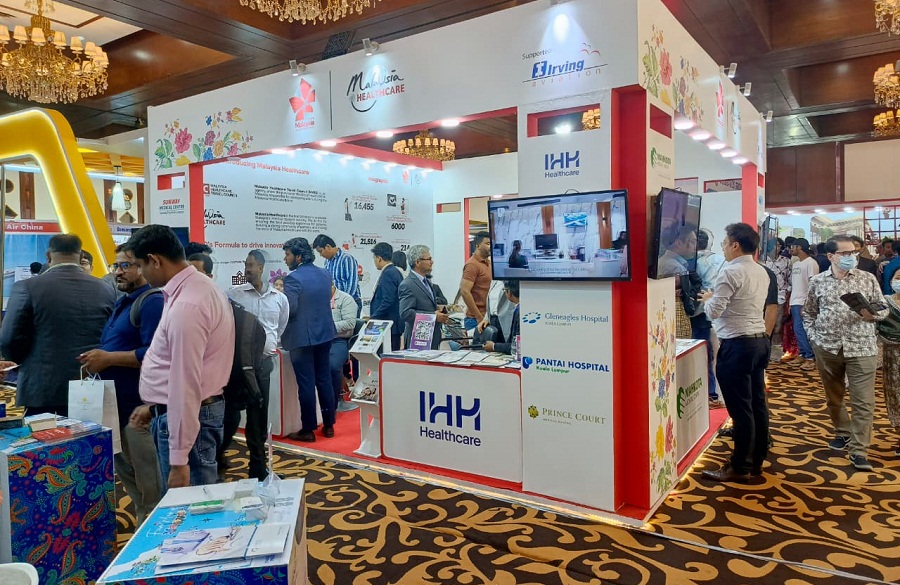
A stall of the Malaysia Healthcare Travel Council at the Air Astra Dhaka Travel Mart 2026 held at Pan Pacific Sonargaon Dhaka.
TCV: What is the role of Malaysia Year of Medical Tourism 2026 (MYMT 2026)?
Muhammad Hizami Aizat: MYMT 2026 is a national initiative aligned with Visit Malaysia 2026. It aims to promote Malaysia’s strengths in quality treatment, affordability, accessibility, and hospitality. The campaign highlights a holistic experience under the theme “Healing Meets Hospitality.”
TCV: What promotional strategies are being implemented?
Muhammad Hizami Aizat: MHTC is using digital platforms, media collaborations, and targeted campaigns in key markets. Promotions are also conducted at international travel points, supported by Tourism Malaysia and brand ambassador Dato’ Sri Siti Nurhaliza.
TCV: What support is available for international patients planning treatment in Malaysia?
Muhammad Hizami Aizat: We work closely with partners to ensure a seamless journey for patients. Our local partner in Bangladesh, Irving Aviation, can assist patients with hospital connections, counselling, visa processing, and air ticket arrangements to ensure a smooth and seamless medical travel experience.
TCV: What is Malaysia’s key message to healthcare travellers?
Muhammad Hizami Aizat: Malaysia offers reliable, high-quality healthcare with a strong focus on patient comfort. It combines medical excellence with hospitality, making it a preferred global destination.
TCV: Have global challenges affected the sector?
Muhammad Hizami Aizat: While global issues such as geopolitical tensions and inflation have some impact, healthcare remains essential. Even during difficult periods, cross-border medical travel continues, showing the sector’s resilience.